Install Location, May 2026
Garage Tankless Water Heater Install Cost in 2026
Installing a tankless in a garage is one of the cheapest locations in the US because the venting is straightforward and the existing tank is often already there. Installed cost runs $2,300 to $3,800 in 2026, with freeze-protection and code-clearance items being the only location-specific complications.
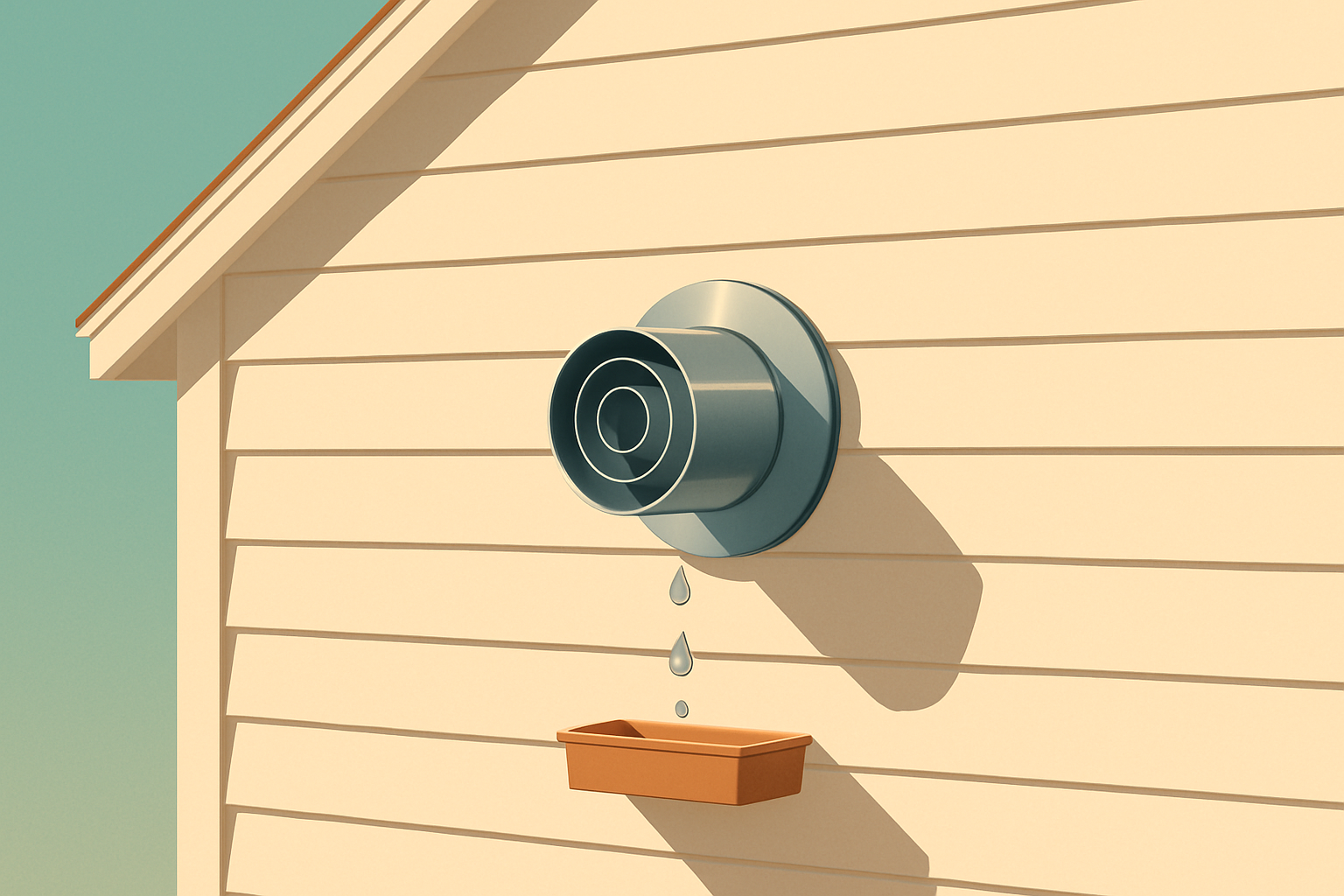
Why garages are cheap install locations: exterior wall is feet away (cheap venting), floor drain often present (cheap condensate), gas line often already runs to the existing tank (no resize), and the installer can park their truck 20 ft away from the unit (lower labour time).
Why the garage is the cheapest US install location
The four cost variables that drive tankless install pricing all favour garage installs:
- Vent run length. A garage install typically vents through the adjacent exterior wall in 6 to 18 inches of pipe. An interior install in a closet or basement may need 15 to 40 ft of vent to reach an exterior wall, costing $200 to $600 more in materials.
- Condensate handling. Most US garages have a floor drain or can drain to one with a few feet of PEX. Interior installs often need a condensate pump ($100 to $250 plus electrical work).
- Gas line work. If the existing water heater is already in the garage, the gas line is already there. Resize to 3/4 inch is typically a short run from the existing 1/2 inch stub.
- Labour efficiency. Installers can roll their tools and materials directly into the garage with no carrying through living space, no floor protection needed, no carpet to worry about. Knock 1 to 2 hours off the labour line vs an indoor install.
Itemised garage install cost: Rinnai RU160iN
3-bath suburban home, attached garage, existing 50-gallon gas tank in garage being converted to tankless:
| Line item | Cost | Notes |
|---|---|---|
| RU160iN unit | $1,500 to $1,900 | Same as any install |
| Gas line resize | $200 to $700 | Short run from existing stub typically |
| Concentric vent kit, 18 inch through-wall | $140 to $260 | Cheaper than long interior runs |
| Condensate drain (to floor drain or grade) | $40 to $120 | Cheap if floor drain present |
| Condensate neutraliser | $60 to $120 | Required by code |
| 120V electrical (often existing in garage) | $60 to $200 | Lower than interior install |
| Isolation valves and flush ports | $80 to $160 | Required by warranty |
| Labour, 5 to 8 hours | $500 to $1,040 | 1 to 2 hr less than interior install |
| Permit and inspection | $80 to $250 | Same as any install |
| Old water heater removal | $60 to $120 | Easier access in garage |
| Total installed | $2,720 to $4,870 | 2026 garage scenario |
Most garage installs land in the lower half of this range ($2,300 to $3,500) when the existing tank's infrastructure (gas line, water lines, electrical) is in code-compliant condition and can be partially re-used.
Code requirements specific to garage installs
The IRC and IFGC impose two specific requirements on garage-mounted gas appliances. Both are easy to comply with on a wall-mounted tankless but it is worth confirming the installer follows them.
18-inch ignition source elevation
IRC G2408.2 / IFGC 305.1 requires the burner (ignition source) to be at least 18 inches above the garage floor. The rule exists because gasoline vapours are heavier than air and pool at floor level; an ignition source at floor level can trigger a vapour explosion. Wall-mounted tankless units installed at standard 4 to 6 ft above the floor easily satisfy this rule. The exception that catches people is a low-mounted tankless installed in a converted garage being used as a workshop with paint or solvent storage.
Protection from vehicle damage
IRC G2407.1 / IFGC 303.6 requires garage-mounted appliances to be protected from physical damage by vehicles. Standard compliance: mount the unit on a wall that vehicles cannot reach (a side or rear wall, not directly behind the parking space), or install a 4 inch steel bollard set in concrete in front of the unit. Bollard cost: $100 to $300 supplied and installed. Most inspectors accept either approach.
Freeze protection for cold-climate garages
Garages in MN, ME, ND, MT, upstate NY, and similar cold-climate states routinely drop to 20F or below in mid-winter. Most tankless units include built-in freeze protection that heats the unit when internal temperature drops below 36F, drawing 80 to 200 watts continuously during cold periods. This works as long as the unit has power.
The catastrophic failure mode is a winter power outage during a hard freeze. A tankless unit without power, sitting in a 15F garage, can crack its heat exchanger within 6 to 12 hours of being below freezing. Repair cost for a cracked heat exchanger is $800 to $1,400 if covered by warranty (labour only), $1,400 to $2,200 if not covered.
Three protection strategies, in order of cost:
- Insulate the garage (R-13 walls, R-30 ceiling). Reduces frequency of below-freezing interior temperatures. Cost: $1,500 to $3,500 for an average 2-car garage. Helps with much else besides the tankless.
- Install a small heater that maintains 45F+ in the garage during winter. A 1,500 watt fan-forced or oil-filled electric heater on a thermostat, $80 to $200. Operating cost in cold climates: $50 to $150 per winter.
- Add manual drain valves and a freeze-protection protocol. If an extended outage is forecast (24+ hours), drain the unit through the isolation valves. Cost: $0, but requires being home and paying attention to weather forecasts.
Hot-water travel time from the garage
The cost of the install does not cover the operating cost of waiting for hot water. If your garage is 50 ft from the master bath, expect 15 to 30 seconds of waiting and 1 to 2 gallons of cold water down the drain on every demand event. For a 4-person household this adds up to 3,000 to 6,000 gallons of wasted water per year, plus the time.
The fix is recirculation. Two options:
- Built-in pump (Navien NPE-A2, Noritz NRCP). The recirculation is engineered into the unit; install premium of $200 to $500 over the non-recirc equivalent.
- Aftermarket pump (Grundfos UP15, Taco Smart Plug). Adds $400 to $800 to the install (pump $200 to $350, plumbing $200 to $400, electrical $0 to $50). Works with any tankless.
Either approach pays back the install premium in 3 to 6 years in water savings alone, faster if you value not waiting.
Detached garage installs (different math)
A tankless in a detached garage serving a main house has additional complications:
- Underground water lines from house to garage ($800 to $2,500 in trenching plus PEX or copper)
- Underground gas line if applicable ($600 to $1,800)
- Heat tape on the buried lines in cold climates ($150 to $400 plus operating cost)
- Insulated above-grade penetrations to prevent freeze
Detached-garage tankless installs typically run $4,500 to $8,000 total. Almost always cheaper to install a small point-of-use electric tankless inside the house and dedicate the detached-garage tankless to the garage's own use only.
Federal tax credit: ended for 2026 installs
The IRS Section 25C credit (30% of installed cost, capped at $600 per tax year for tankless) ended for any unit placed in service after December 31, 2025, under the One Big Beautiful Bill Act. A 2026 install gets no federal credit. If your unit was installed during 2025, you can still claim it on your 2025 return via IRS Form 5695.
Bottom line
The garage is the cheapest place in most US homes to install a tankless water heater. Installed cost runs $2,300 to $3,800 in 2026 because venting is short, condensate drains easily, gas line is often pre-existing from the prior tank, and labour is efficient. The two location-specific issues are code compliance (18 inch ignition height, vehicle protection) and freeze protection in cold climates. Both are easy and cheap to address. The hot-water travel-time penalty is real and worth pricing in a recirculation pump for distant fixtures.
Related install pages
Frequently asked questions
How much does it cost to install a tankless water heater in a garage?
A garage tankless install costs $2,300 to $3,800 in 2026, $300 to $700 less than an interior install for the same unit. The savings come from simpler through-wall venting (typically a 12 to 18 inch concentric vent run through the garage exterior wall vs an interior run requiring soffits or chases) and easier access for the installer.
Are tankless water heaters allowed in garages?
Yes in all US jurisdictions, subject to two code requirements. First, the ignition source (the burner) must be at least 18 inches above the garage floor per IRC G2408.2 / IFGC 305.1 to prevent ignition of gasoline vapours, which are heavier than air and pool near the floor. Wall-mounted tankless units easily clear this. Second, the heater must be protected from physical damage by vehicles, typically with a steel bollard or by mounting on a wall away from vehicle path.
Do I need freeze protection on a garage-mounted tankless?
Yes, in any climate where the garage interior temperature can drop below 32F. Modern tankless units include built-in freeze protection (heating elements that energise when temperature drops below 36F), but this only works while the unit has power. A power outage during a hard freeze can crack the heat exchanger. Best practice in cold climates: insulate the garage, install a small heater that maintains 40F+ in the garage during winter, and add isolation valves that allow draining the unit if a long outage is forecast.
Can I mount a gas tankless directly on the garage wall?
Yes. Tankless units are designed for direct wall mounting, typically 4 to 6 ft above the floor for service access. The wall should be exterior (to facilitate vent termination outdoors) and structural (so the unit's 65 to 90 pound weight has adequate support). A 2x4 wall with proper anchoring or a 2x6 wall with standard lag bolts is sufficient. Avoid cinder-block exterior walls unless the installer uses concrete anchors rated for the load.
What about hot-water travel time from the garage?
If the garage is on the opposite side of the house from the kitchen and master bath, expect 15 to 30 seconds of waiting for hot water at distant fixtures, plus the standing waste of 1 to 2 gallons sitting in the supply line. The fix is a recirculation pump (built into Navien NPE-A2 or Noritz NRCP, or an aftermarket Grundfos UP15) which adds $200 to $800 to the install but eliminates the wait.