Florida Pricing, May 2026
Tankless Water Heater Install Cost in Florida 2026
Florida tankless installs run $2,200 to $3,800 in 2026, around 20% below the US median. The cost advantages stack: warm year-round inlet temperatures letting smaller units cover bigger homes, mostly-electric installs without complex gas-line work, and modest labour rates. The Florida-specific complications are hurricane mounting code and salt-air corrosion in coastal zones.
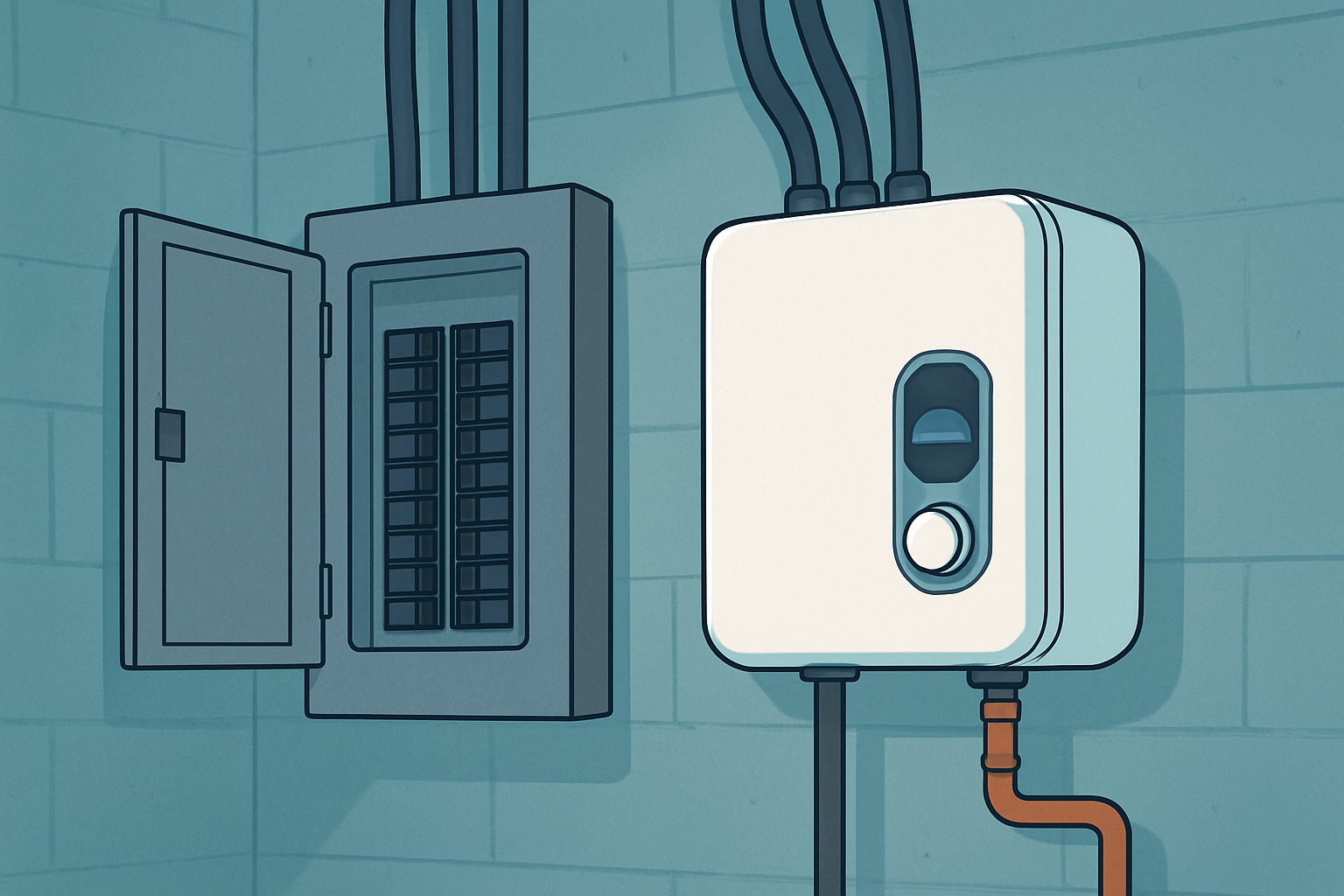
The unique Florida question: heat-pump water heater (HPWH) competition is unusually strong because of the warm ambient air and FPL rebates that typically exceed the tankless rebate. The federal tax credit ended December 31, 2025, so it no longer tips the scales either way. Always run the full HPWH vs tankless comparison before committing in FL.
Why Florida tankless economics are friendlier than the US median
Three Florida-specific advantages explain the favourable pricing:
- Warm year-round inlet temperatures. Florida municipal water averages 75F in summer and 65F in winter, vs 50F summer and 40F winter in the upper Midwest. That means a 5 GPM electric unit in FL delivers what a 7 to 8 GPM unit would deliver in MN, and a 9 GPM gas unit in FL covers what an 11 GPM unit would cover up north. Smaller capacity = lower equipment cost = lower install cost.
- Mostly-electric homes. Around 75% of Florida homes use electric tank water heaters (vs 60% nationally). Replacing an electric tank with an electric tankless is the simplest possible install: re-use the existing 240V circuit, the existing water connections, and the existing install location. No gas-line resize, no vent kit, no condensate drain.
- Modest labour rates. Per the Bureau of Labor Statistics May 2025 plumber wage data, the FL mean plumber wage is $26.94 per hour, vs $34.70 nationally. Translates to $85 to $120 billed labour in FL metros.
Itemised Florida install cost: Stiebel Tempra 24 Plus in Tampa
3-bath suburban home, electric tank to electric tankless conversion, existing 200A panel:
| Line item | Cost | Notes |
|---|---|---|
| Stiebel Eltron Tempra 24 Plus unit | $700 to $900 | 4 GPM at 50F rise; FL inlets let it deliver to spec |
| Existing 100A breaker re-used or relocated | $30 to $80 | Most FL electric tanks had similar breaker |
| Wiring: 1/0 AWG copper, 15 ft run | $100 to $200 | Often re-used from prior install |
| Water-line connections | $60 to $140 | Existing connections reused |
| Hurricane-rated mounting hardware | $40 to $80 | Required by FL Building Code in most counties |
| Labour, 3 to 5 hours | $255 to $600 | $85 to $120 per hour FL metros |
| Permit and inspection | $80 to $200 | Lower than US median |
| Old water heater removal | $60 to $120 | Standard disposal |
| Total installed | $1,325 to $2,320 | Electric tank to electric tankless, FL |
Itemised gas tankless install: Rinnai RU160iN in Jacksonville
For the minority of FL homes with natural-gas service, a gas tankless install:
| Line item | Cost | Notes |
|---|---|---|
| Rinnai RU160iN unit | $1,500 to $1,900 | 9 GPM at 35F rise, plenty for FL with warm inlets |
| Gas line resize | $400 to $900 | Same as US median |
| Concentric vent kit (15 ft, exterior wall) | $240 to $400 | Short runs typical in FL slab construction |
| Condensate drain | $60 to $120 | Required by code |
| 120V electrical for controls | $80 to $250 | Often easy in FL utility closets |
| Isolation valves and flush ports | $80 to $160 | Required by warranty |
| Hurricane-rated mounting hardware | $40 to $80 | Florida-specific |
| Labour, 7 to 10 hours | $595 to $1,200 | $85 to $120 per hour |
| Permit and inspection | $100 to $250 | Slightly higher for gas |
| Old water heater removal | $60 to $120 | Standard |
| Total gas install | $3,155 to $5,380 | Most installs $3,000 to $4,200 |
Regional cost variation within Florida
Florida is less variable than Texas or California but still has meaningful sub-regional differences:
| Region | Labour rate | Climate factor | Install cost |
|---|---|---|---|
| Miami metro | $100 to $130 per hr | Salt-air coastal | $2,500 to $4,000 (add 10% to 15% for coast) |
| Tampa Bay metro | $85 to $120 per hr | Mixed coast/inland | $2,300 to $3,800 |
| Orlando metro | $80 to $115 per hr | Inland | $2,200 to $3,700 |
| Jacksonville metro | $85 to $120 per hr | Coastal north | $2,400 to $3,900 |
| Fort Myers / Naples | $95 to $130 per hr | Salt-air coastal | $2,500 to $4,100 |
| Pensacola / Panhandle | $75 to $105 per hr | Mixed | $2,100 to $3,500 |
| Florida Keys | $110 to $150 per hr | Intense salt-air, limited supply | $2,800 to $4,500 |
The heat-pump water heater alternative
In Florida, heat-pump water heaters (HPWH) deserve serious consideration as the alternative to tankless. Two reasons the case is unusually strong in FL:
- Warm ambient air maximises HPWH efficiency. An HPWH pulls heat from surrounding air to heat water; efficiency drops in cold ambient air. Florida's 70 to 85F average garage and utility-closet temperature year-round is HPWH-optimal. Coefficient of Performance (COP) of 3.5 to 4.0 vs 2.0 to 2.5 in northern installations.
- FPL rebates. Florida Power and Light has paid rebates for ENERGY STAR HPWH installs that exceed its tankless rebate amounts; check FPL's current program schedule and dsireusa.org before purchase.
One change for 2026: the federal Section 25C credit, which previously gave HPWH a higher cap than tankless ($2,000 vs $600), ended for units placed in service after December 31, 2025, under the One Big Beautiful Bill Act, so it no longer favours either option.
The trade-off: HPWH is tank-style (60 to 80 gallon footprint), produces some cooling and dehumidification in the install space (sometimes a feature in FL, sometimes a bug), and takes 5 to 8 hours to recover a fully-depleted tank. For most FL households the math favours HPWH; for households that specifically value on-demand unlimited hot water, tankless still wins.
Hurricane and salt-air specific requirements
The Florida Building Code mandates wind-load resistance for all wall-mounted appliances in coastal counties. For tankless installs:
- Mounting hardware must be hurricane-rated (typically stainless lag bolts with proper anchoring to studs or masonry)
- Wall-mount brackets must be rated for 150+ mph wind loads in HVHZ (High Velocity Hurricane Zone) counties (Miami-Dade and Broward)
- Exterior installations require additional weatherproofing
For salt-air corrosion mitigation within 5 miles of the coast:
- Specify Rinnai SE+ Series (stainless heat exchanger) instead of standard RU Series; $200 to $400 premium
- Install indoors where possible
- If outdoor install is required, use marine-grade weatherproof enclosure; $200 to $500 added cost
- Clean the unit's exterior every 6 months to prevent salt buildup on electronics
Federal tax credit: ended for 2026 installs
The IRS Section 25C credit (30% of installed cost, capped at $600 per tax year for tankless) ended for any unit placed in service after December 31, 2025, under the One Big Beautiful Bill Act. A 2026 install gets no federal credit. If your unit was installed during 2025, you can still claim it on your 2025 return via IRS Form 5695.
For utility rebates, Florida Power and Light, Tampa Electric, and Duke Energy Florida have at times offered water-heater rebates; check the utility's current program schedule at fpl.com/save and dsireusa.org before purchase.
Bottom line
Florida is among the best US markets for tankless install economics. Pricing runs $2,200 to $3,800; the federal credit ended December 31, 2025, so check your utility's current rebate schedule for any remaining incentives. The Florida-specific items are mostly cost reductions (warm inlets, electric-dominant install base, modest labour) with two real complications (hurricane mounting code, coastal salt-air corrosion). The serious question to address before committing is whether a heat-pump water heater might beat tankless on 10-year cost in your specific household.
Related state and brand pages
Frequently asked questions
How much does a tankless water heater install cost in Florida in 2026?
Florida tankless installs run $2,200 to $3,800 in 2026, about 20% below the US median. The cost advantage comes from warm year-round inlet water temperatures (65 to 80F) that mean smaller units perform like larger units would in cold climates, modest plumber labour rates ($85 to $120 per hour), and the prevalence of like-for-like replacements (Florida homes mostly already have electric tank heaters, which makes the conversion straightforward).
Is gas tankless even an option in Florida?
Only in homes with existing natural-gas service, which is a minority in Florida (around 25% of FL homes have gas service vs 60% in Texas). Most Florida tankless installs are electric, which actually works well in FL because the warm inlet temperatures let a 4 to 5 GPM electric unit cover a whole-house demand profile that would need 7 to 9 GPM in a cold-climate state.
Do hurricane requirements affect tankless install costs?
Yes, in coastal counties. Florida Building Code requires certain water-heater mounting hardware to be hurricane-rated, with positive mechanical attachment to wall studs or masonry that survives 150+ mph wind loads. The required hardware is a $40 to $80 line item on the install, plus 15 to 30 minutes of additional labour. Outdoor wall-mounted tankless units (common in Florida lanais or exterior utility closets) also need a rated weatherproof enclosure or recessed installation, which adds $200 to $500 to the install.
Should I be looking at heat-pump water heaters instead?
In Florida, the case for heat-pump water heaters (HPWH) is unusually strong. Warm year-round ambient air means HPWH efficiency is at its peak, and Florida Power and Light has offered rebates on ENERGY STAR HPWH installs that exceed its tankless rebate amounts; check FPL's current program schedule and dsireusa.org before purchase. Note the federal Section 25C credit, which previously gave HPWH a $2,000 cap vs $600 for tankless, ended for units placed in service after December 31, 2025, under the One Big Beautiful Bill Act. For new construction or replacement of an electric tank, HPWH often still beats electric tankless on 10-year cost of ownership in Florida.
What about salt-air corrosion on outdoor tankless installs?
A real factor within 5 miles of the coast. Salt air corrodes tankless heat exchangers and electronics faster than inland air, dropping expected lifespan from 20 years to 10 to 14 years on coastal installs. Mitigation: install indoors when possible, use a marine-grade weatherproof enclosure for outdoor installs, and clean the unit's exterior every 6 months. Rinnai's stainless heat-exchanger SE+ series is more salt-tolerant than the standard copper RU series; budget the SE+ premium of $200 to $400 if you live in a coastal zone.